Bingo 1 to 25: rules and 6 tips to finish 5 lines first
The classic 1 to 25 bingo from school, explained: how to fill your grid, how calling works, and six simple tips to cut your 5 lines before anyone else.
By Tikogames team · · 4 min read
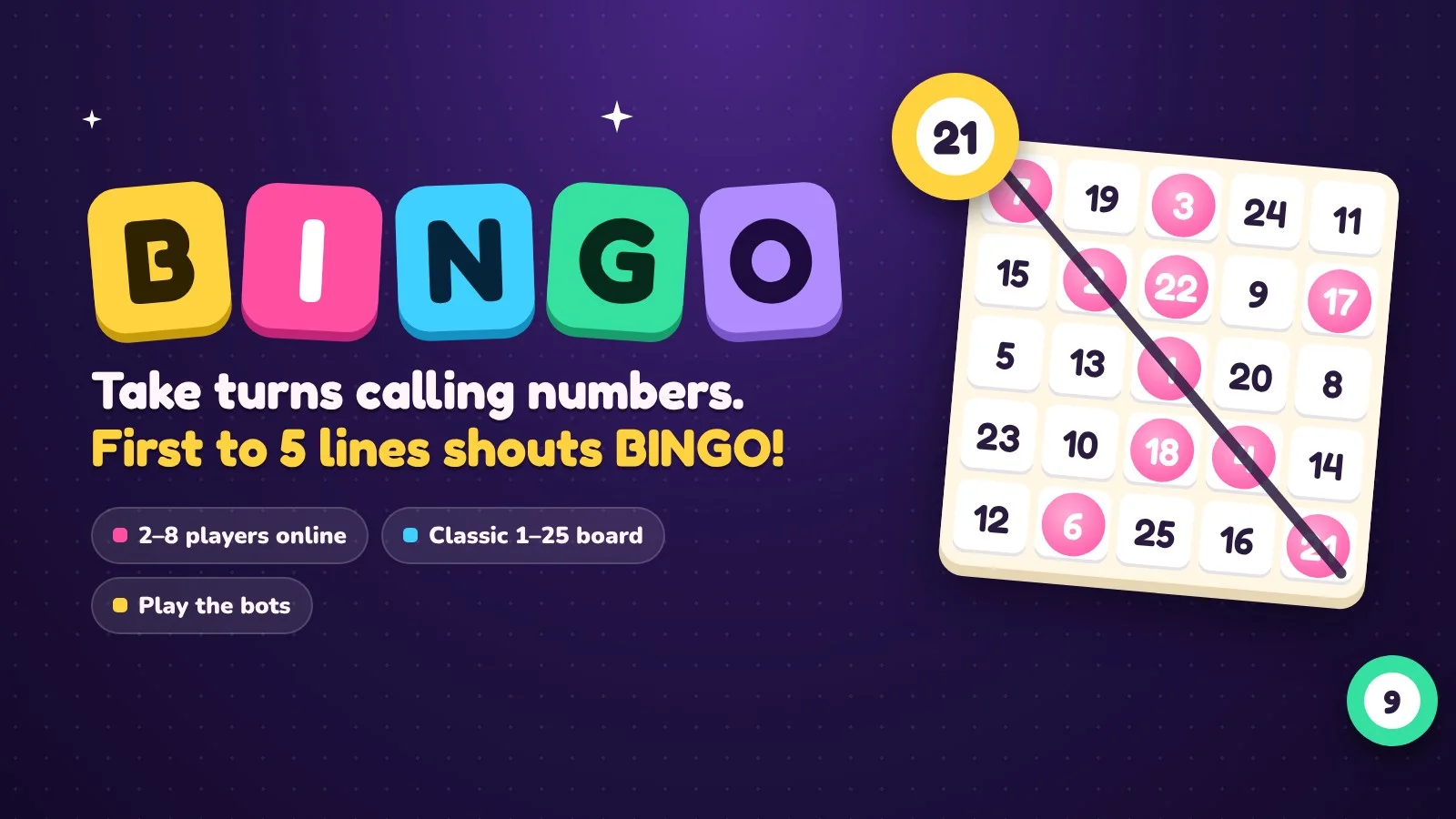
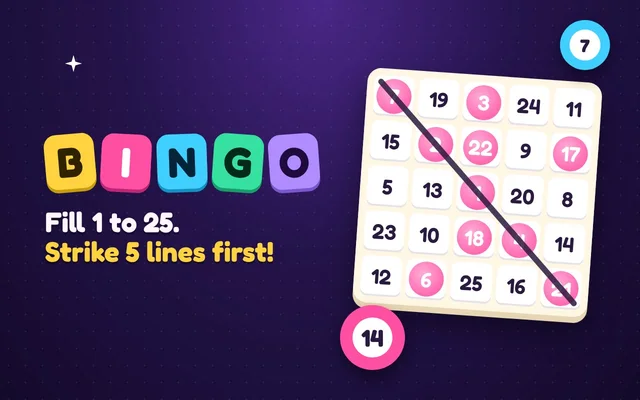
If you went to school in India, there's a good chance you played this in the back of a notebook: draw a 5×5 grid, fill it with the numbers 1 to 25, and take turns calling numbers until someone cuts five lines and shouts "BINGO!" It's nothing like the bingo you see in halls, with a caller and printed tickets. Here every player fills their own grid, and every player is also a caller.
That makes it a game of skill, not just luck. This guide covers the rules and the tips that make the difference.
When we tested the online version, the games between experienced players were always much closer and faster than games with beginners, and almost always for the same reason: experienced players arrange their grids before the game so their lines share numbers. That's tip number one below.
The rules
- Each player draws a 5×5 grid and fills it with the numbers 1 to 25, in any order they like. Each number appears exactly once. Your grid stays secret.
- Players take turns calling a number. On your turn, you call any number that hasn't been called yet.
- Everyone crosses off the called number on their own grid, wherever it is.
- Cut lines. A line is any complete row, column or diagonal. There are 12 possible lines: 5 rows, 5 columns and 2 diagonals.
- Each line you finish earns a letter of B-I-N-G-O.
- The first player to finish 5 lines wins by shouting BINGO.
Because every number gets called eventually, everyone will finish their lines in the end. The game is about who gets there first.
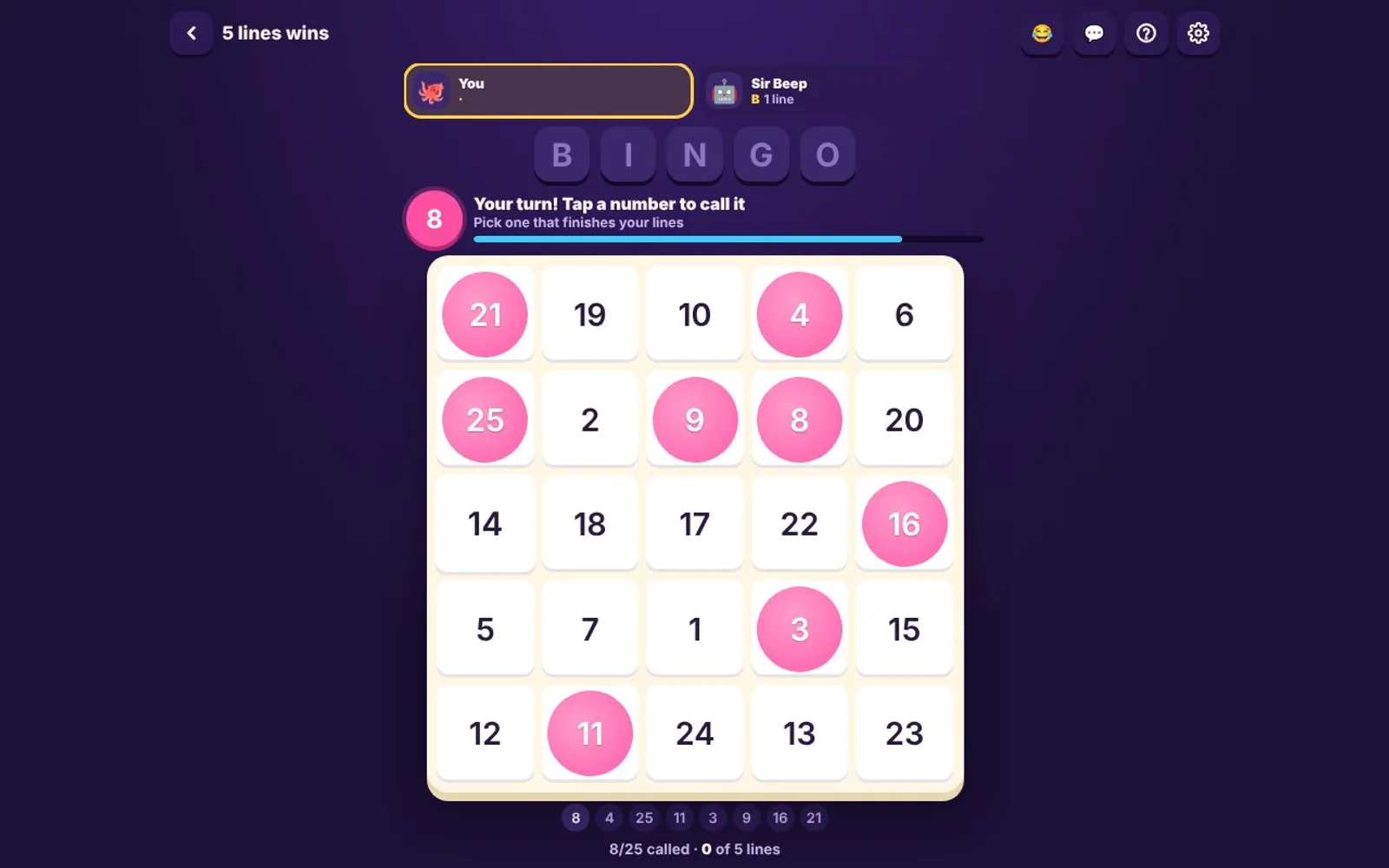
Six tips to win
1. Arrange your grid so lines overlap
Each number on your grid belongs to one row and one column. Some numbers also belong to a diagonal. The more lines a number belongs to, the more powerful it is.
The centre square is part of four lines: its row, its column and both diagonals. The four corners are part of three lines each. Put the numbers you plan to call first in those squares.
2. Plan your first calls before the game starts
You choose what to call on your turns, so decide in advance. A strong plan is to call the numbers along one diagonal first. Every call then crosses off a square that helps two or three of your lines at once.
3. Call numbers that finish your own lines
Every number you call is crossed off on everyone's grid, but it helps you more than anyone else if it's in your nearly finished line. When you have a line with four squares crossed off, call the fifth.
4. Watch what other players call
Your opponents are also calling numbers that suit their own grids. If someone keeps calling numbers that help you too, great. If you notice a player is close to finishing (for example, they're calling numbers quickly and confidently), try to finish your own lines faster rather than spreading out.
5. Don't chase one line too hard
Five lines is the goal, not one perfect line. Sometimes the best call finishes nothing on its own but brings three different lines to four squares each. A few turns later, they can all finish together.
6. Count your lines carefully
Lines are easy to miss on paper, especially diagonals. A finished diagonal you haven't noticed is a letter you're not counting. In our online game, finished lines light up automatically, so you'll always know exactly where you stand.
Playing Bingo 1 to 25 online
In our Bingo 1-25 game, the rules are the same as on paper:
- Fill your board by tapping squares, or tap Auto-fill if you're in a hurry. Then tap Ready.
- Take turns calling by tapping a number on your own board. It's crossed off on every player's board at the same moment.
- Every finished line lights up a letter of B-I-N-G-O, and struck lines stay struck so you can see them at a glance.
- Play your way:
- create a private room and share the code with 2 to 8 friends;
- use quick match to find a player;
- or play against 1 to 3 bots that call numbers to finish their own lines.
- Quick mode lets 3 lines win instead of 5, for shorter games.
It's free, works on any phone or computer, and involves no money. It's the school game, just without the notebook.
Is this the same as Tambola?
No. In Tambola and in 75 or 90 ball bingo, a caller draws the numbers and you mark a printed ticket, so the game is mostly luck. In 1 to 25 bingo, you build your own grid and choose your own calls, which is why a good plan wins more often.
If you enjoy both, we have Tambola too. And if your friends say this game is pure luck, invite them to a room and show them the centre-square trick.