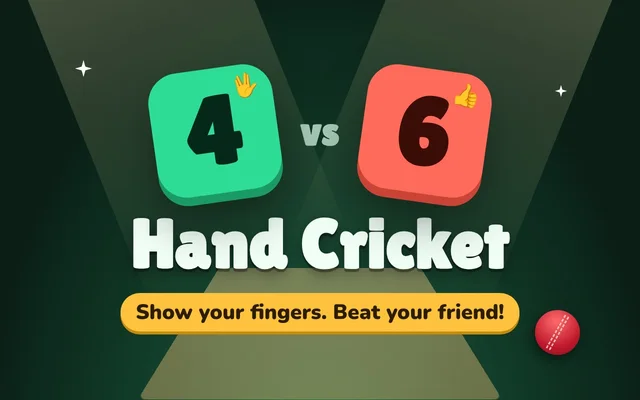
Hand Cricket tricks to win: batting, bowling and chasing tips
Practical Hand Cricket tricks for numbers 1 to 6: how to bat without getting read, how to bowl people out, how to pace a chase, and how to spot your opponent's habits.
By Tikogames team · · 5 min read
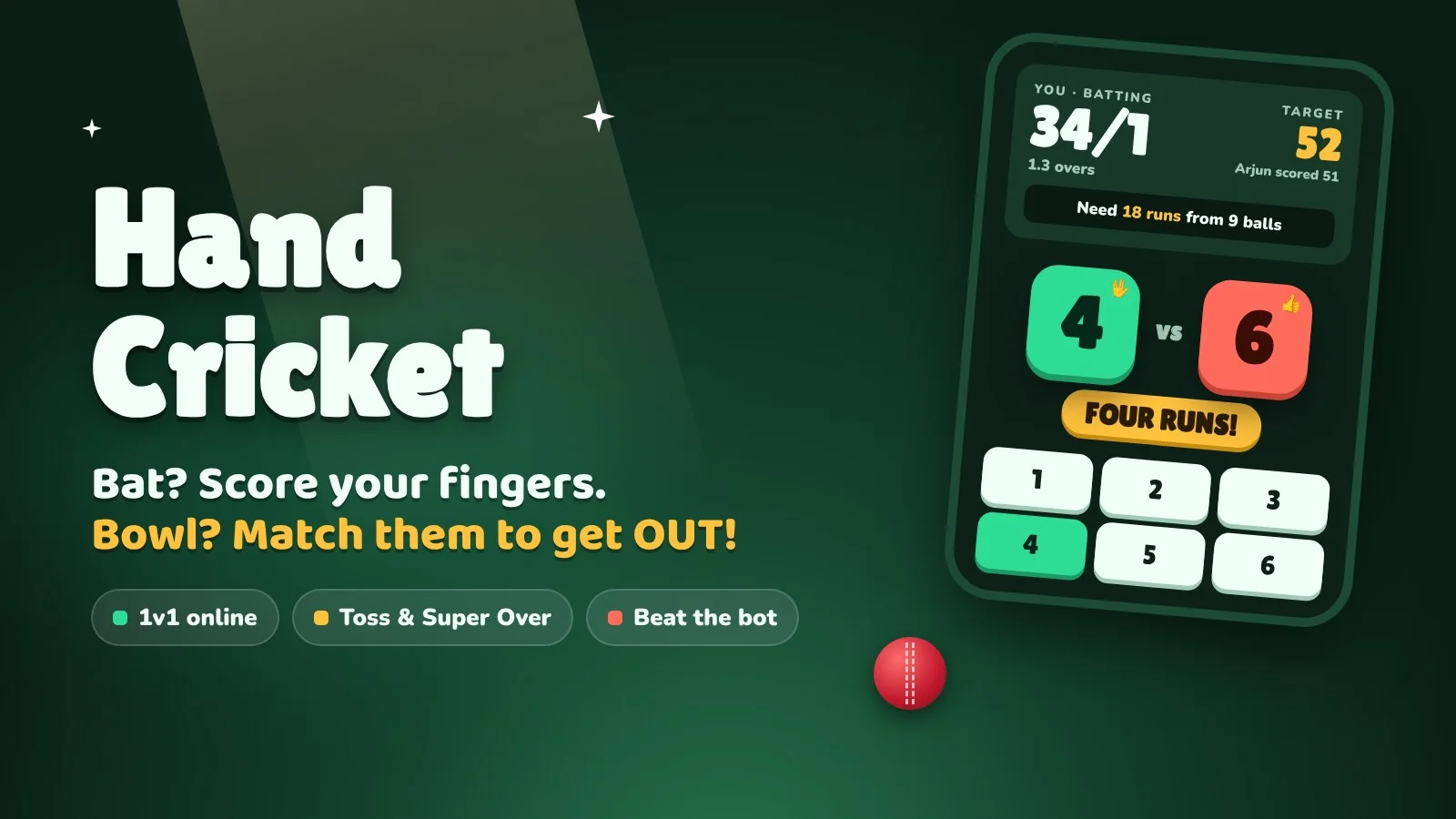
The best Hand Cricket trick is simple: be harder to read than your opponent, and read them better than they read you. Batters get out because they repeat themselves, and bowlers miss because they guess at random instead of watching. Fix those two things and you will win far more matches.
No trick wins every single match, because your friend is guessing too. But the tips below will tilt the odds your way, whether you play on your fingers at school or in our free Hand Cricket game.
When we built the computer player, we made it learn your favourite numbers as the match goes on. Testing it taught us a lot about our own habits. Most of us threw far more 6s than we thought, and the bot soon started bowling 6s back at us. Many of the tricks below came from trying to beat it.
Hand Cricket tricks 1 to 6: know your numbers
Every number from 1 to 6 has the same chance of getting you out if your opponent picks at random. The difference is what each one earns you, and how often people expect it.
| Number | Runs | How often people expect it | |---|---|---| | 6 | Most | Very often. It's everyone's favourite. | | 5 | High | Often, as the "safer 6". | | 4 | Medium | Sometimes. A good all-rounder. | | 3 | Medium | Less often. Feels "boring". | | 2 | Low | Rarely when batting. | | 1 | Lowest | Rarely, except under pressure. |
So the numbers people guess least are often the small ones. That makes 3 and 4 quietly useful: decent runs, and fewer bowlers look for them.
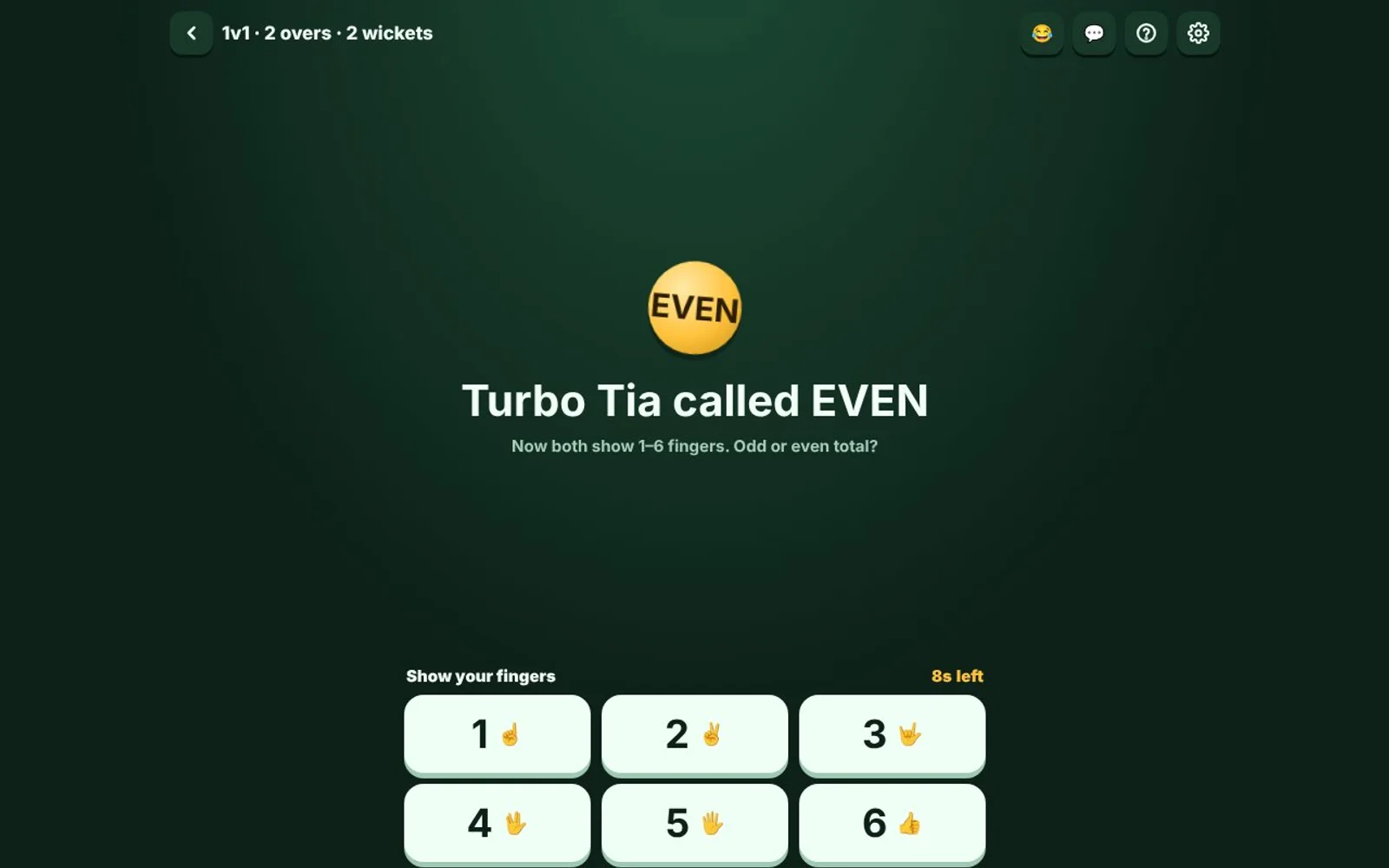
Hand Cricket batting tips
Don't fall in love with 6
Big numbers feel good, but a batter who throws 6 every other ball is easy to bowl at. Use 6 when your opponent has stopped expecting it, for example right after you have played two or three small numbers.
Mix in a repeat
Most people think being random means never picking the same number twice. A good bowler knows this and stops bowling the number you just played. So repeating a number straight away is one of the safest balls you can play, as long as you don't make it a habit.
Avoid counting patterns
Going 1, 2, 3, 4 or 6, 5, 4, 3 feels random but is easy to spot. So is copying the bowler's last number. If you notice yourself following any rule, break it.
Play the situation
Early in an innings with plenty of wickets in hand, you can take more risks with 5 and 6. When you are down to your last wicket, steady 3s and 4s keep you in the game longer.
Hand Cricket bowling tips
Watch the last three balls
Most batters have a favourite, and it shows. Keep a mental note of their last few numbers. If 6 has come up twice, bowl 6. If they just scored a 6, they often go for it again.
Bowl where the pressure goes
When a batter needs a few runs to win, they often play safe with 1, 2 or 3. When they need a lot, they reach for 5 and 6. Bowl the number their situation is pushing them towards.
Don't chase their last number
A common mistake is bowling the number the batter just played. Some batters repeat, but many switch. Look at their overall habits, not just the last ball.
How to pace a chase
Chasing is where most matches are won or lost. A simple way to think about it:
- Work out the rate. Divide the runs you need by the balls left. If you need about 3 a ball, you don't need 6s at all.
- Need a little, play small. With plenty of balls left, 2s, 3s and 4s get you there with less risk.
- Need a lot, go big but vary it. Mix 5s and 6s with the odd 4 so the bowler can't sit on one number.
- Last ball nerves. Under pressure, players pick their favourite. If you are bowling the last ball, bowl their favourite. If you are batting, pick something else.
How to read your opponent
Reading people is the real skill in Hand Cricket. Look for:
- A favourite number they come back to.
- Streaks where they play high, high, high, then drop to small.
- Reactions. After getting out on a number, many players avoid it for a while.
- Copying. Some batters play whatever the bowler bowled last time.
Our game has a time per ball setting. A short timer helps you here, because quick decisions show people's true habits.
The best Hand Cricket strategy against the computer
Our bot learns your favourite numbers, so the longer you play, the more it reads you. To beat it, keep your choices spread across all six numbers, throw in surprise repeats, and avoid leaning on 6 late in a chase. If it starts matching you often, change your rhythm for a few balls.
What about 1 to 10 Hand Cricket?
Some groups play a 1 to 10 version using both hands. The same tricks work: avoid a favourite, watch for patterns and play to the situation. With ten numbers there are more options, so getting out on a guess is a bit less likely and scores run higher. Our online game uses the classic 1 to 6.
Practise with a friend
Open Hand Cricket and create a room to send your friend an invite link, use quick match to find a player, or practise against the computer first. The room creator picks the overs, wickets and time per ball, so you can play a quick one-over game or a longer match.
Common questions
Is there a trick to win every hand cricket match? No. Your opponent is guessing too, so luck always plays a part. Being unpredictable and reading habits just gives you a better chance.
Which number is best in Hand Cricket? No single number is best. 6 scores the most but is the one bowlers expect. 3 and 4 are often a good balance of runs and surprise.
How do I get my friend out more often? Watch their last few balls and look for a favourite number. Under pressure, people go back to it.
What happens if the scores are level? In our game, a one-over Super Over decides the match.
How does the computer play? It learns which numbers you choose most often and tries to match them, so spreading your picks is the best defence.