Snakes and Ladders rules: rolling a 6, the exact finish and house rules
The standard Snakes and Ladders rules, plus the house rules every family argues about: needing a 6 to start, extra turns on a 6, three 6s, and whether you need an exact roll to land on 100.
By Tikogames team · · 5 min read
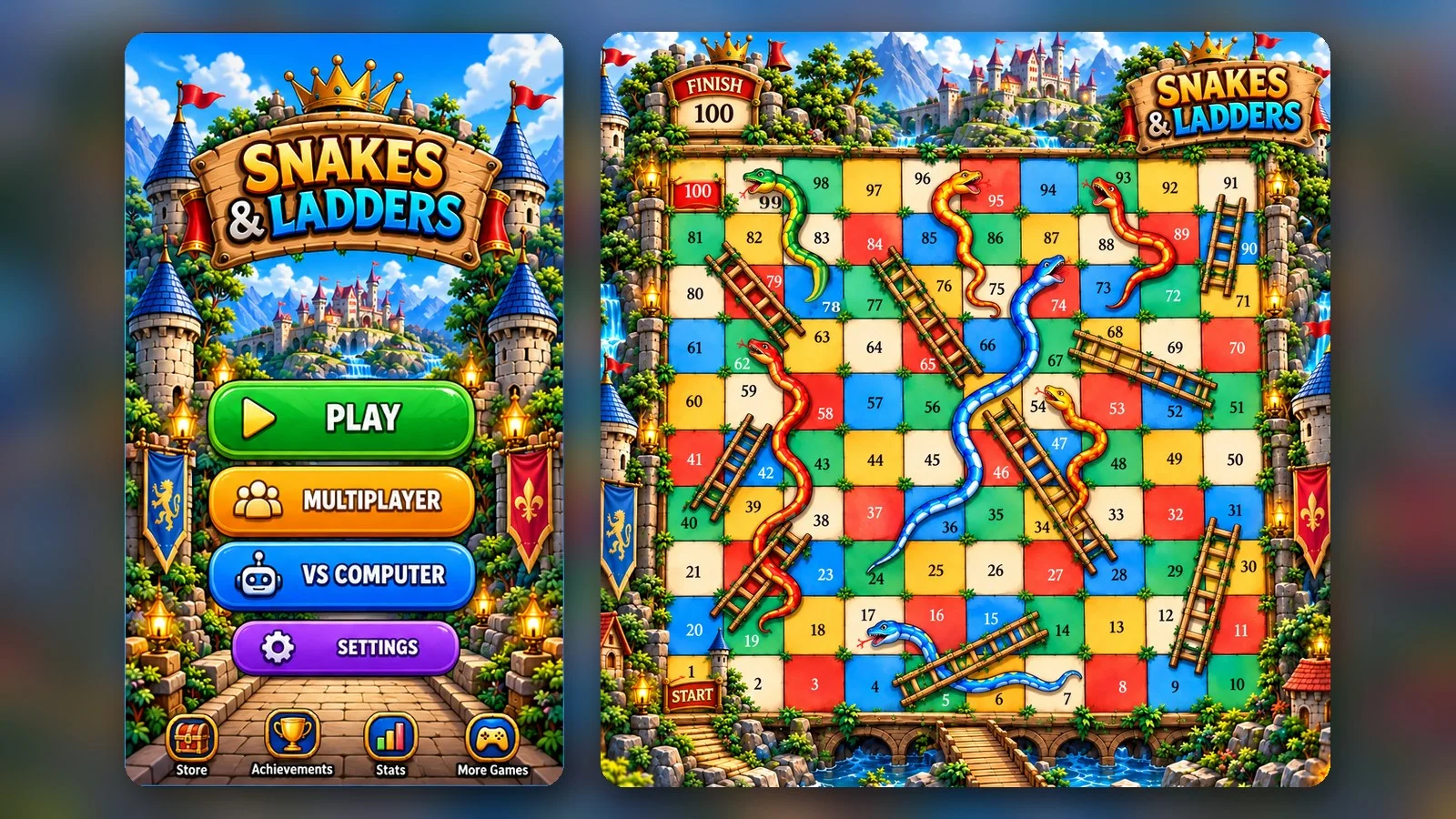
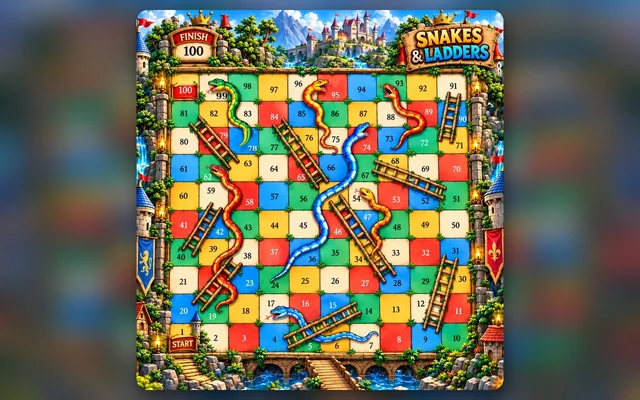
The basic Snakes and Ladders rules are simple. Players take turns rolling one dice and moving their token forward that many squares. Land at the bottom of a ladder and you climb to the top. Land on a snake's head and you slide down to its tail. The first player to reach square 100 wins.
Everything else, like needing a 6 to start or an exact roll to finish, is a house rule. Families play these differently, so this guide covers the standard rules first, then each common house rule, so you can agree before the first roll.
While we were building our online Snakes and Ladders, the finish was the rule that split our test games. Some of us had always played "exact roll", others had never heard of "bounce back". So we made it a room setting: the host picks exact roll, bounce back or any roll before the game starts, along with whether a 6 gives you another roll.
The standard Snakes and Ladders rules
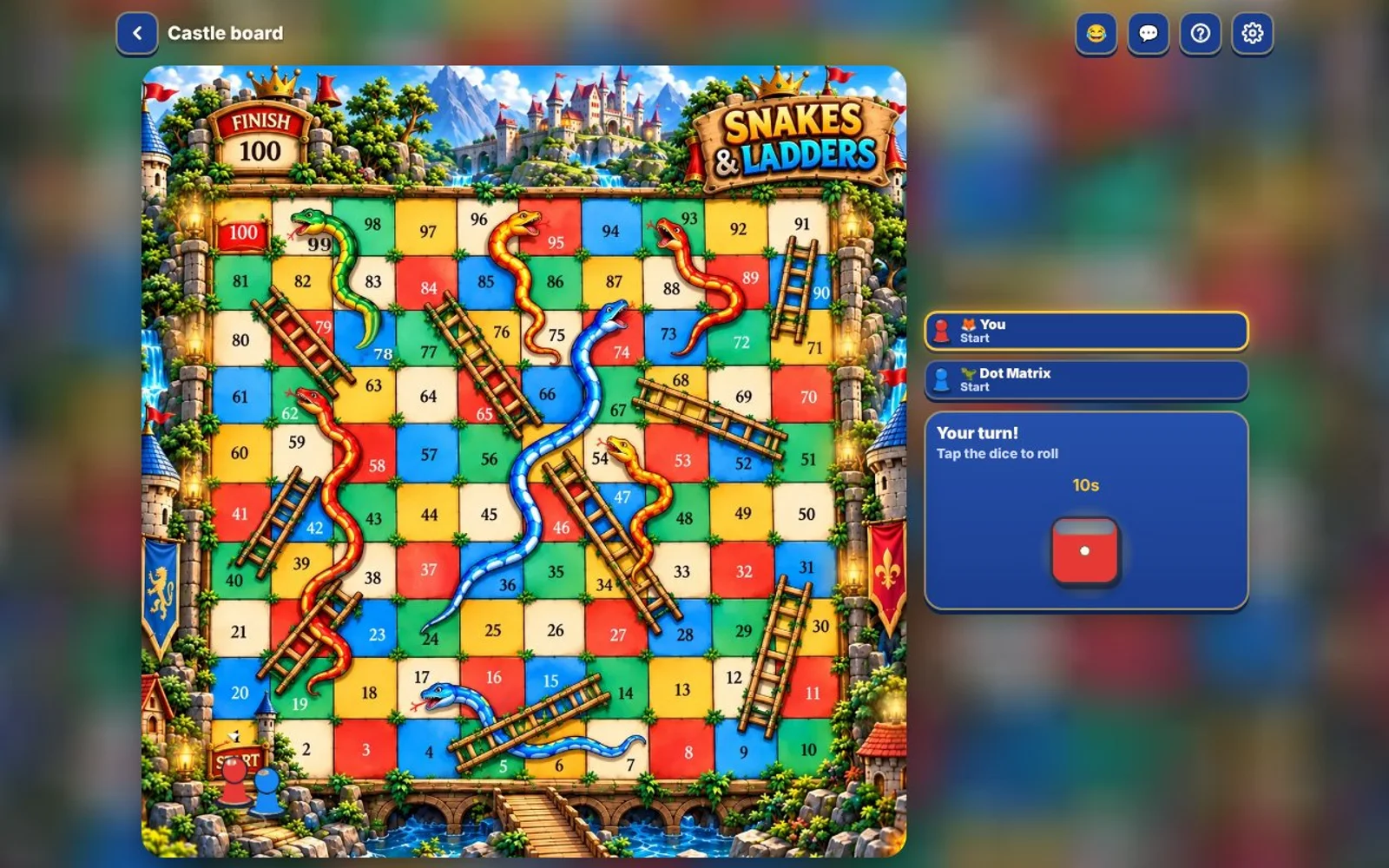
- The board. A board of 100 squares, numbered 1 to 100 in a zigzag. Row one goes left to right, row two goes right to left, and so on up to 100 at the top.
- Players. Two or more players, each with one token. Everyone starts off the board, before square 1.
- Who goes first. Everyone rolls once. The highest roll starts and play goes clockwise.
- Moving. Roll the dice and move forward that many squares, following the numbers.
- Ladders. If you finish your move on the square at the bottom of a ladder, move straight up to the square at its top.
- Snakes. If you finish your move on a snake's head, slide down to the square at its tail.
- Winning. The first player to reach square 100 wins.
Only the square you finish on counts. Passing over a snake's head or the bottom of a ladder does nothing.
How many dice do you use?
The standard game uses one normal six-sided dice.
Snakes and Ladders with 2 dice
Some families roll two dice and add them up to make the game faster. It works, but you can never move just 1 square, which makes an exact finish harder. If you use two dice, agree on what doubles do. A common choice is that doubles give you an extra roll, in place of the 6 rule.
Do you need a 6 to start?
Not in the standard rules. Your first roll moves you onto the board, so a 3 puts you on square 3.
Many families do play that you must roll a 6 to get onto the board, the same way you leave base in Ludo. If you play this way, decide whether the 6 also moves you to square 6, or just puts you on square 1. Both versions are common.
Do you get another turn if you roll a 6?
In the plain rules, no. A 6 is just a 6.
As a house rule, rolling a 6 gives you another roll, and lots of people grew up with this. In our version this is a room setting. With "roll a 6 = roll again" switched on, you can roll again up to three times in a row.
What about three 6s in a row?
Families who play the extra-roll rule usually add a limit so one player can't race off forever. The most common versions are:
- Three 6s and your turn ends. You stop where you are.
- Three 6s and you go back. Your token returns to where it started that turn, or even back to the start.
Pick one before you begin.
Do you need the exact number to land on 100?
This is the big one. There are three common ways to play the finish:
| Rule | What happens if your roll is too high | |---|---| | Any roll | You win as soon as your roll reaches or passes 100. | | Exact roll | You don't move. You have to roll the exact number to land on 100. | | Bounce back | You move up to 100, then move backwards with the steps left over. |
Example with bounce back: you're on 97 and roll a 5. You move 98, 99, 100, then back to 99 and 98. You end on 98, and if there's a snake's head there, down you go.
Exact roll makes the ending tense, because a player on 99 needs a 1. Any roll is the quickest choice for small children. Our game lets the room host choose any of the three.
Snakes and Ladders rules for kids
For young players, keep it simple:
- No 6 needed to start.
- A 6 is just a normal roll, or allow one extra roll at most.
- Any roll that reaches 100 wins.
It's also a good way to practise counting. Let kids count the squares out loud as they move.
Chutes and Ladders rules
Chutes and Ladders is the American name for the same game, sold as a boxed board game. The chutes are slides that take you down, just like snakes. The boxed version usually comes with a spinner instead of a dice, but the rules are the same idea: climb the ladders, slide down the chutes, and be the first to reach 100. If you know one, you already know how to play the other.
Play Snakes and Ladders online
Open Snakes and Ladders and pick how you want to play:
- Create a room and share the 5-letter code or invite link. Each game has 2 to 4 players.
- Quick match finds you another player online.
- Play vs bots to race 1 to 3 computer players.
There are 3 boards: Classic, Ladder party (more ladders, faster games) and Snake pit, for the brave.
If you're looking for more games to play with one other person, see our list of the best 2-player games online.
Common questions
Do you have to roll a 6 to start in Snakes and Ladders? Not in the standard rules. Needing a 6 to start is a popular house rule, so agree on it before you begin.
What happens if you land on a snake's tail or the top of a ladder? Nothing. Only the snake's head and the bottom of a ladder move you.
Is Snakes and Ladders all luck? Yes. There are no choices to make, which makes it a great game for young kids and mixed ages.
Can I play Snakes and Ladders alone? Yes. Play against 1, 2 or 3 bots in Snakes and Ladders, or try Ludo Online if you want a dice game with a bit more strategy.