Checkers rules: do you have to jump? Plus kings, double jumps and backwards moves
Yes, in standard checkers you have to jump when you can. Here are the beginner rules for forced captures, double jumps, jumping backwards and kings, plus how other versions of draughts differ.
By Tikogames team · · 5 min read
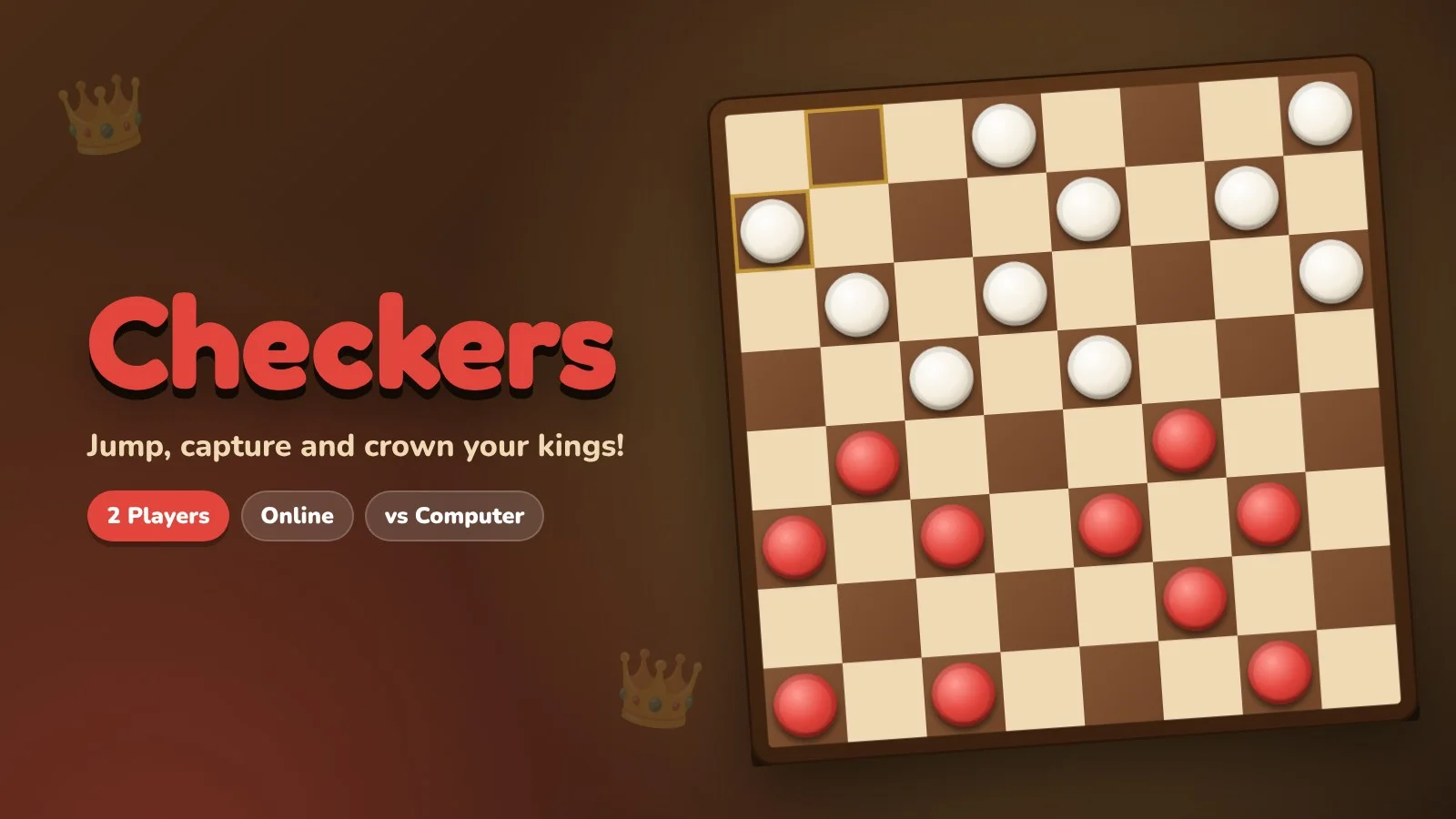
Yes. In standard checkers, if you can jump, you have to jump. Capturing is compulsory. If more than one jump is available, you can choose which one to take, but you can't make a normal move instead. And once you start jumping, you keep going until there are no more jumps for that piece.
A lot of people grew up playing that jumping is optional, so this rule surprises them. This guide explains the standard rules used in American checkers (called English draughts in the UK), including double jumps, kings and the question of jumping backwards. At the end you'll see how other versions of draughts change things.
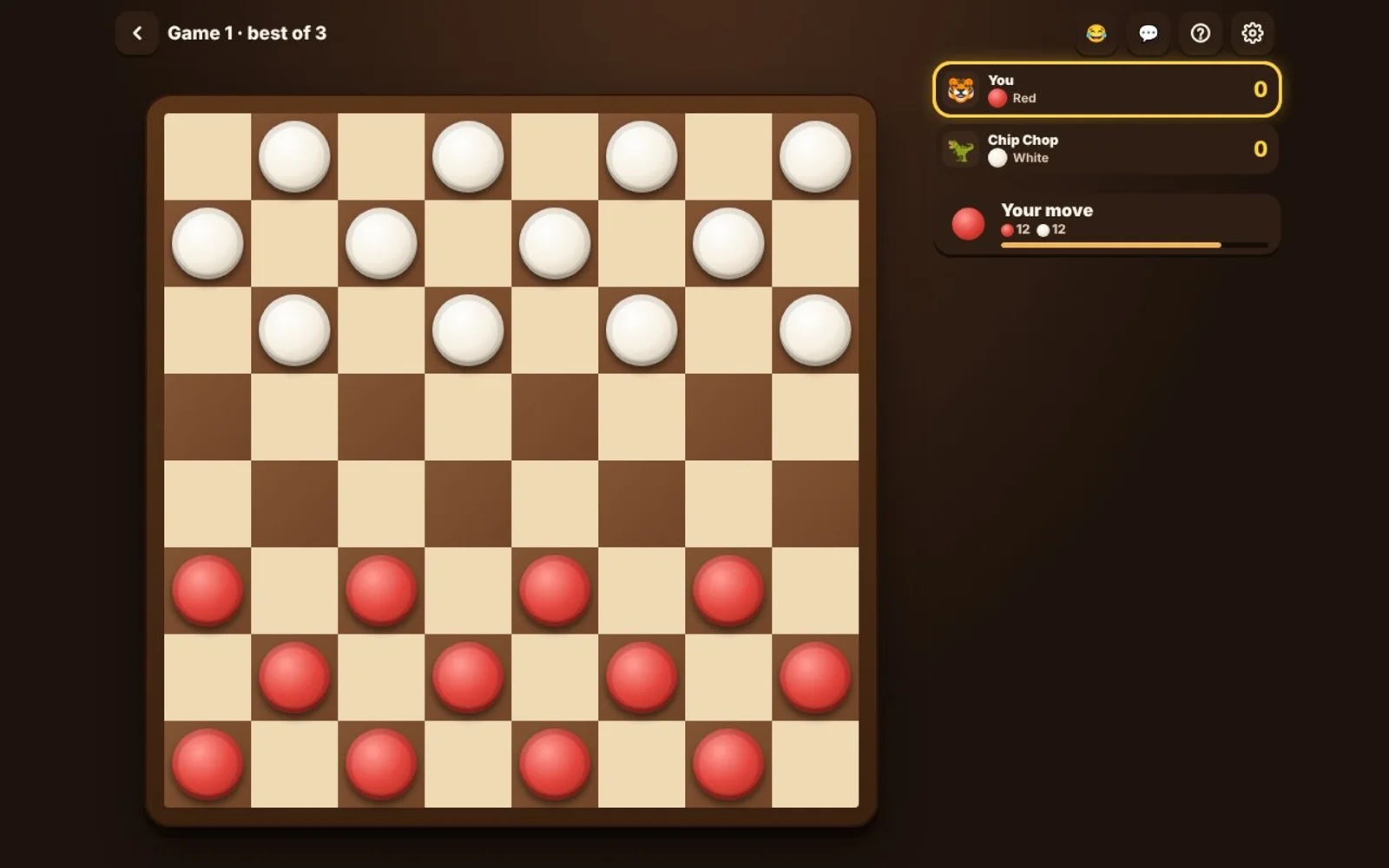
When we built our online Checkers, forced captures were the rule new players tripped over most. So the game lights up the pieces that can move and the squares they can reach. When a jump is compulsory, you can see it straight away instead of wondering why your move won't work.
Checkers rules for beginners
The board and pieces
- Checkers is played on an 8×8 board, using only the dark squares.
- Each player has 12 pieces, called men, set out on the dark squares of the first three rows on their side.
- In American rules, the player with the darker pieces usually moves first. Players take turns after that.
How men move
A man moves one square diagonally forward onto an empty dark square. Men can't move sideways or backwards in a normal move.
How to capture (jumping)
If an opponent's piece is diagonally next to your man, and the square straight behind it is empty, you can jump over it and land on that empty square. The piece you jumped is removed from the board.
Do you have to jump in checkers?
Yes, under the standard rules:
- If any of your pieces can capture, you must capture. You can't make a quiet move instead.
- If there are several captures, you choose. You don't have to pick the one that takes the most pieces.
- You must finish the jump. If your piece can keep jumping after landing, it has to keep going.
This rule is the heart of checkers strategy. Because jumps are forced, you can offer a piece on purpose. Your opponent has to take it, and that can pull their piece into a spot where you jump two or three of theirs in return.
What about "huffing"?
In older home rules, if a player missed a jump, the opponent could remove the piece that should have jumped. This is called huffing. It isn't part of the modern standard rules, where a capture simply has to be made. Some families still play it, so check before you start.
Double jumps and multi-jumps
A double jump happens when your piece lands after a capture and can immediately jump another piece. You keep going in the same turn, jumping one piece after another, and you can change diagonal direction between jumps.
For a man, every jump must still go forward. A king can mix forward and backward jumps in one turn.
One special case: if a man reaches the far row during a jump, it's crowned, and the turn ends there. It can't keep jumping as a new king until your next turn.
Can you jump backwards in checkers?
It depends on the piece and the rules.
- Men: no, in American checkers and English draughts. A man can only move and capture forward.
- Kings: yes. A king can move and capture both forwards and backwards.
In many other versions, like international draughts, men can capture backwards too. That's one of the biggest differences between the rule sets, so it's worth agreeing on before a game.
Checkers rules for kings
When one of your men reaches the far row on your opponent's side, it becomes a king. In a real game you crown it by stacking a second piece on top.
A king in standard checkers:
- moves one square diagonally, forwards or backwards;
- captures forwards or backwards by jumping, the same way a man does;
- can make multi-jumps in any diagonal direction.
Kings are powerful because they can't get trapped against their own back row the way men can. Getting the first king is often a big step towards winning.
How to win
You win when your opponent has no pieces left, or when they can't make any legal move because all their pieces are blocked.
A game can also be a draw if neither side can make progress. In our version, a game is drawn after 40 moves each with no capture and no move by a man.
How other versions of draughts differ
| Rule | American checkers / English draughts | International and other variants | |---|---|---| | Board | 8×8 | 10×10 in international draughts, 8×8 in some others | | Men capture backwards | No | Yes, in many variants | | Kings | Move one square | Flying kings: move any distance along a diagonal | | Must jump | Yes | Yes, and many variants make you take the biggest capture |
Flying kings in our game
Our Checkers has two rule sets. Classic follows standard English draughts on an 8×8 board, as described above. Flying kings is the popular variant where men may capture backwards and kings move and capture any distance along a diagonal. It's a faster, sharper game, and a good change once Classic feels familiar.
Quick tips for beginners
- Look for forced jumps first. Before every move, check whether you have to capture, and whether your move will force your opponent into a jump you want.
- Keep your back row. Pieces left on your first row stop your opponent from getting kings easily.
- Control the centre. Pieces in the middle have more moves and are harder to trap.
- Trade when you're ahead. If you have more pieces, swapping one for one gets you closer to winning.
Common questions
Do you have to jump in checkers? Yes. In standard rules a capture is compulsory, and you must finish a multi-jump once you start.
Can a regular piece jump backwards? Not in American checkers or English draughts. Only kings can. In many other variants, men can capture backwards too.
Can a king jump more than one square? In standard checkers, a king jumps one piece at a time, just like a man, but in any diagonal direction. With flying kings, a king can move and capture along a whole diagonal.
Is checkers the same as draughts? Yes. It's called checkers in the US and draughts in the UK. Our Classic rules are standard English draughts.
Can I play checkers with a friend online? Yes. Create a room, share the code or invite link, and play on separate devices. You can also play the computer on Easy, Normal or Hard.